

A living craft
The Art of Sorrento Marquetry
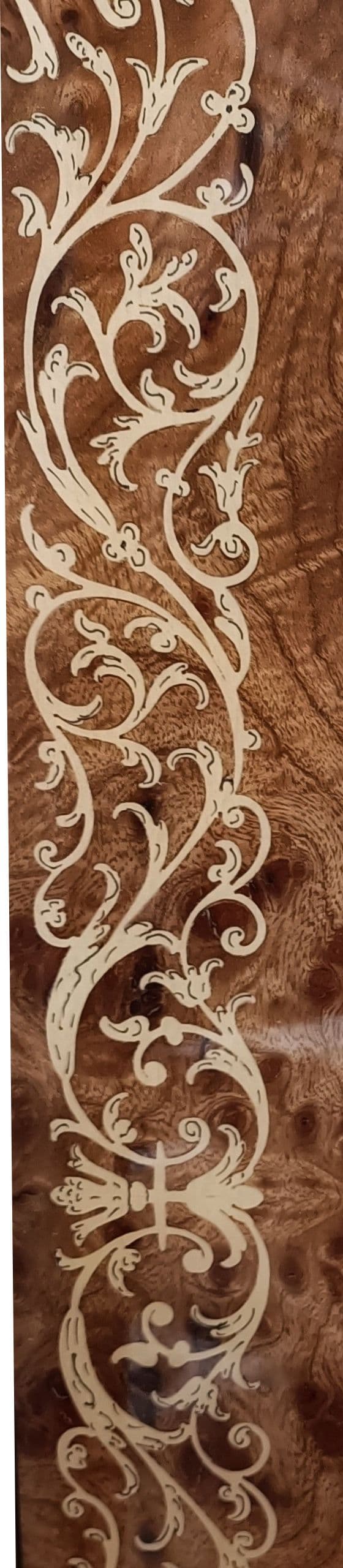
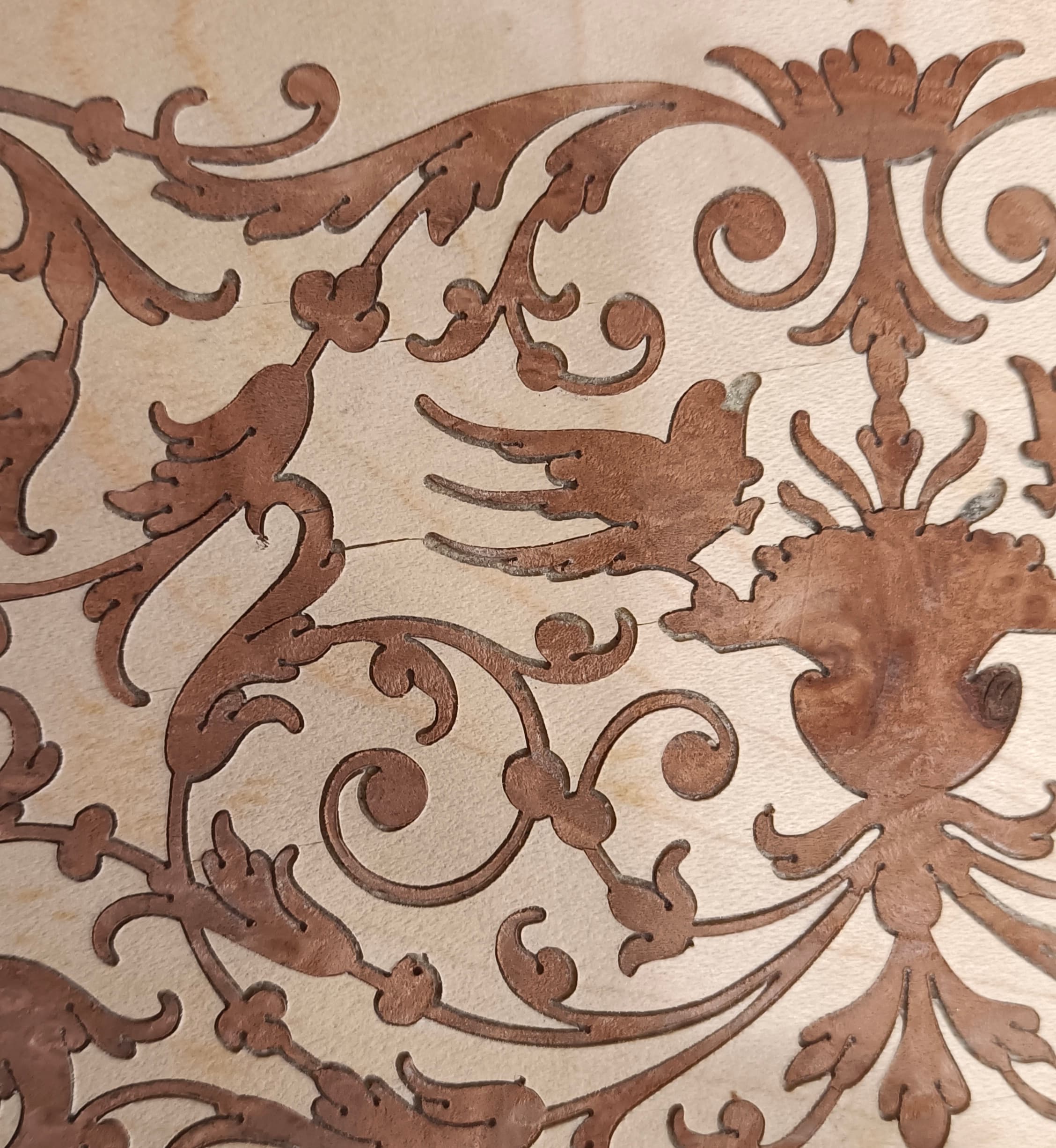
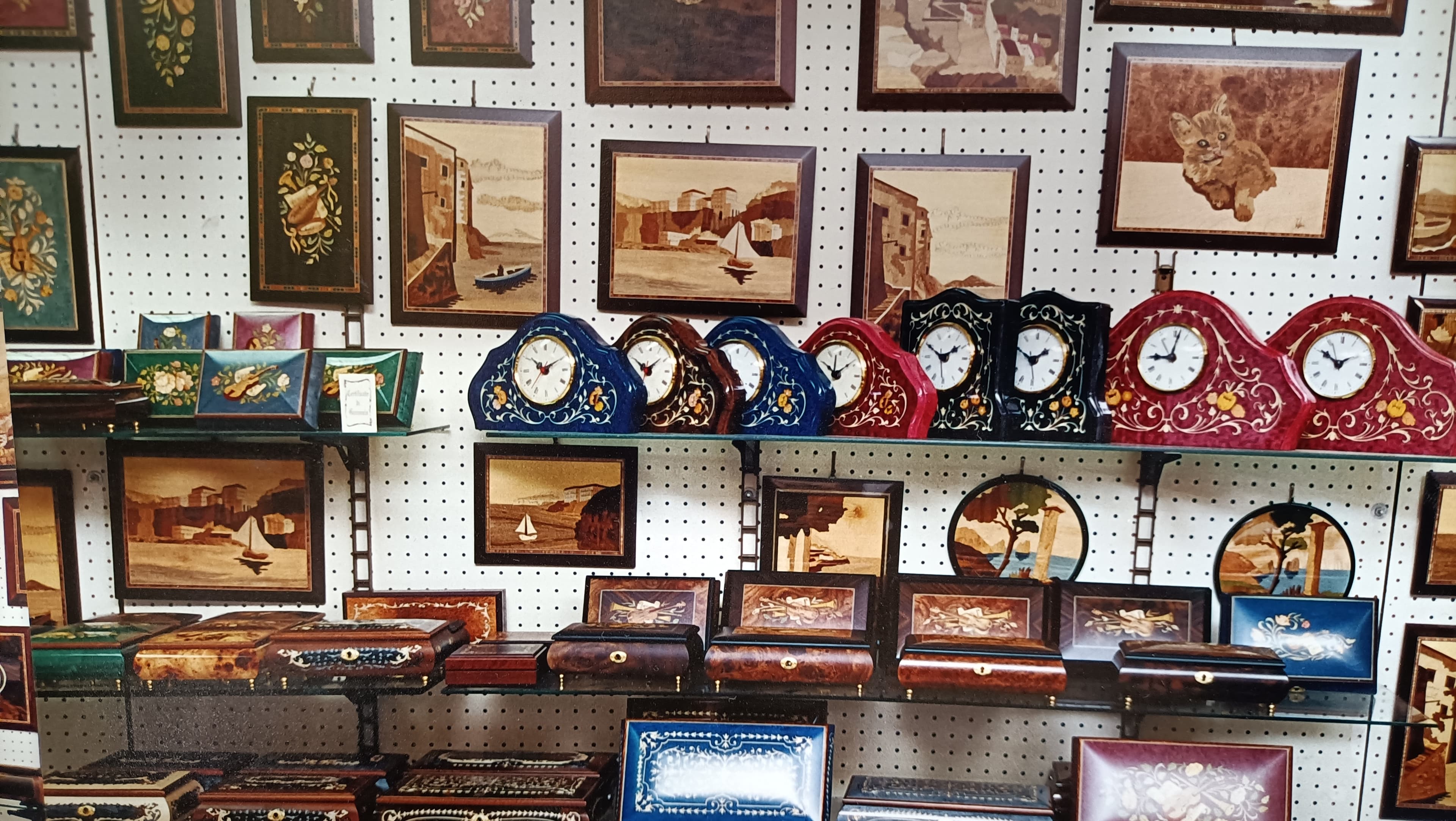
Sorrentine marquetry, known in Italian as tarsia lignea, is the traditional art of creating images and patterns by fitting pieces of wood veneer together. Thin sheets of wood in different natural colours are cut piece by piece and set into a panel until a scene emerges: no paint, no print, just wood against wood.
Why this is different from a souvenir
For travellers and lovers of Italy who want something more meaningful than a mass-produced souvenir, La Botteguccia offers authentic handcrafted pieces made in Sorrento using traditional Sorrentine marquetry.
Not mass-produced.
Not made elsewhere.
Made by hand in Sorrento.
One piece at a time.
A coastal tradition
The craft took hold on this stretch of coast in the early 1800s, when Sorrento was becoming a stop on travellers’ routes along the Bay of Naples. Small workshops began turning local woods into boxes, frames and furniture inlaid with views of the coastline, and the trade grew alongside the town’s reputation as a destination. By the late 19th century it was one of Sorrento’s signature crafts, practiced in family workshops passed down from one generation to the next.
The technique itself is older still, part of a broader Italian marquetry tradition, but the Sorrento style is distinct: lighter, more pictorial, built around the citrus groves, cliffs and boats of the gulf rather than the geometric patterns found further north.
What is Sorrentine marquetry?
Five steps, all by hand
Every piece goes through the same five stages before it’s ready to leave the workshop. None of them can be rushed, which is most of why a hand-inlaid box takes hours to make and a printed one takes seconds.
Macro: a fan of wood veneers in different natural tones
Choosing the wood
Walnut for warm brown, olive wood for a dense dark grain, boxwood and maple for pale highlights, cherry for the tones in between. The natural colour of each wood does most of the work, so very little of what you see is dye.
Macro: pencil design sketched onto paper before cutting
Drawing the design
Before a single piece is cut, the scene is worked out on paper: which wood goes where, and in what order the pieces will need to be set so the picture comes together cleanly.
Cutting each piece
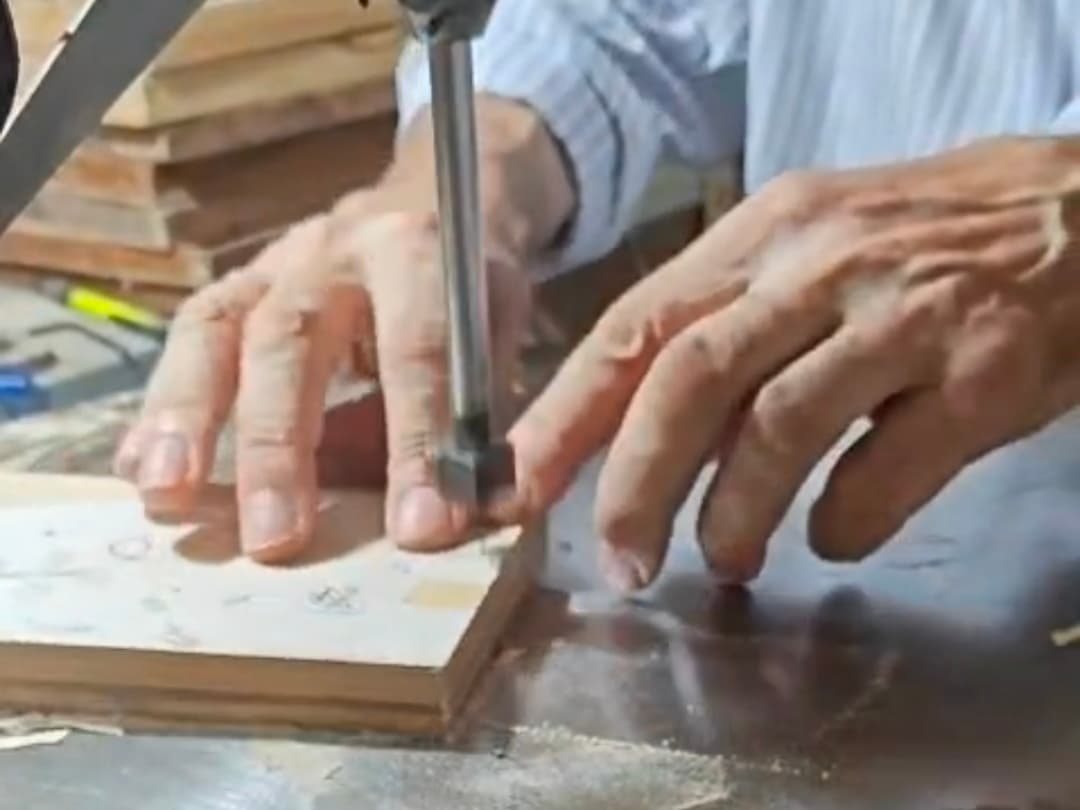
Artisans use a thin fret saw to cut each veneer to shape by hand, following the pencil line by eye. This is the slowest step, and the one that decides how well everything else will fit.
Fitting the veneer
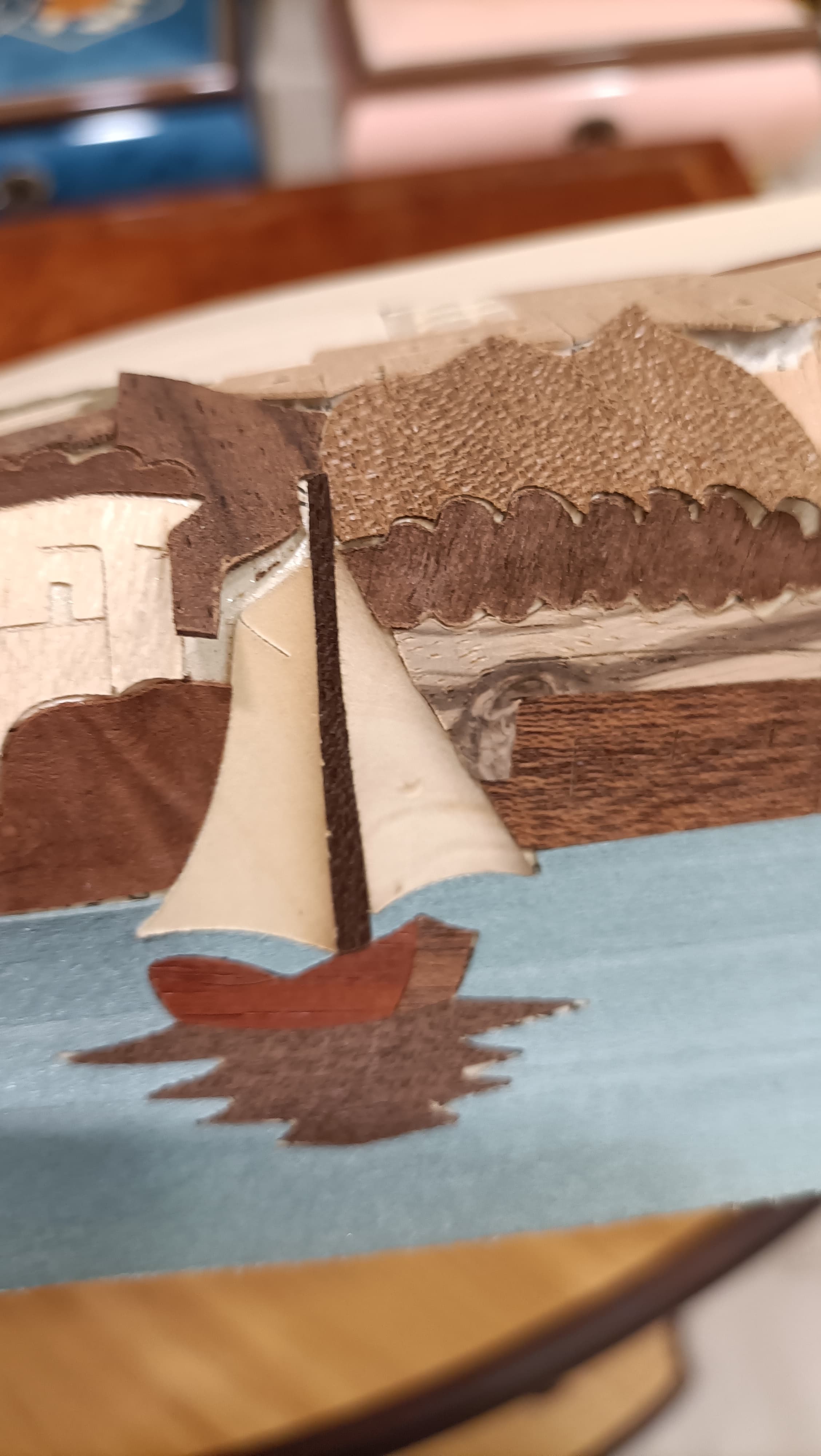
Every piece is set into the panel like a mosaic in wood, pressed edge to edge with no visible gaps, then glued flush to the base.
Finishing the surface
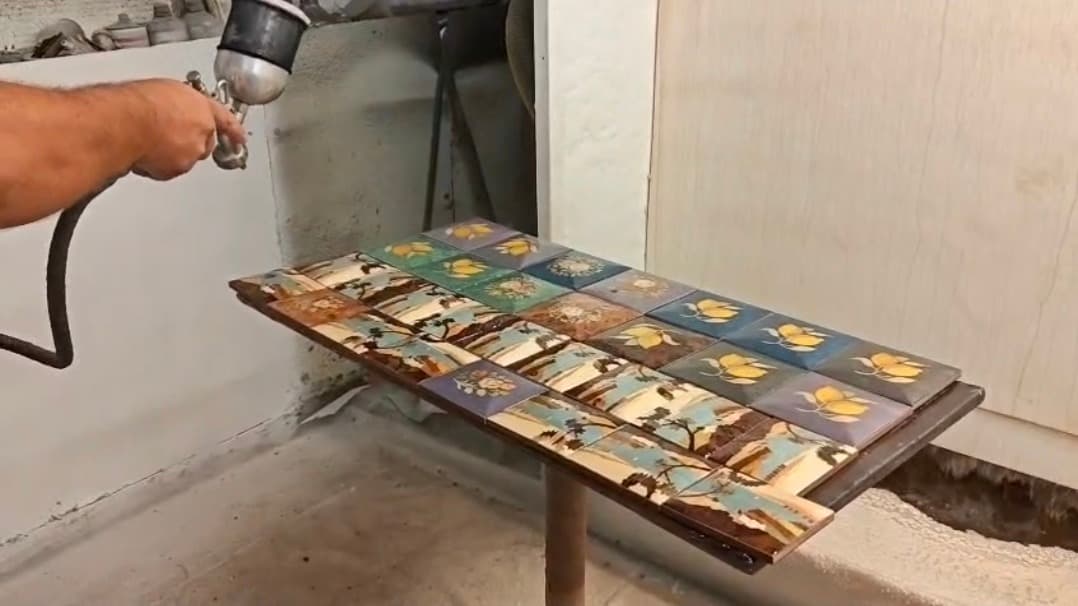
Once the glue has set, the whole panel is sanded flush and lacquered, the step that brings out the colour of every piece and protects it for years of handling.
Patterns of the coast
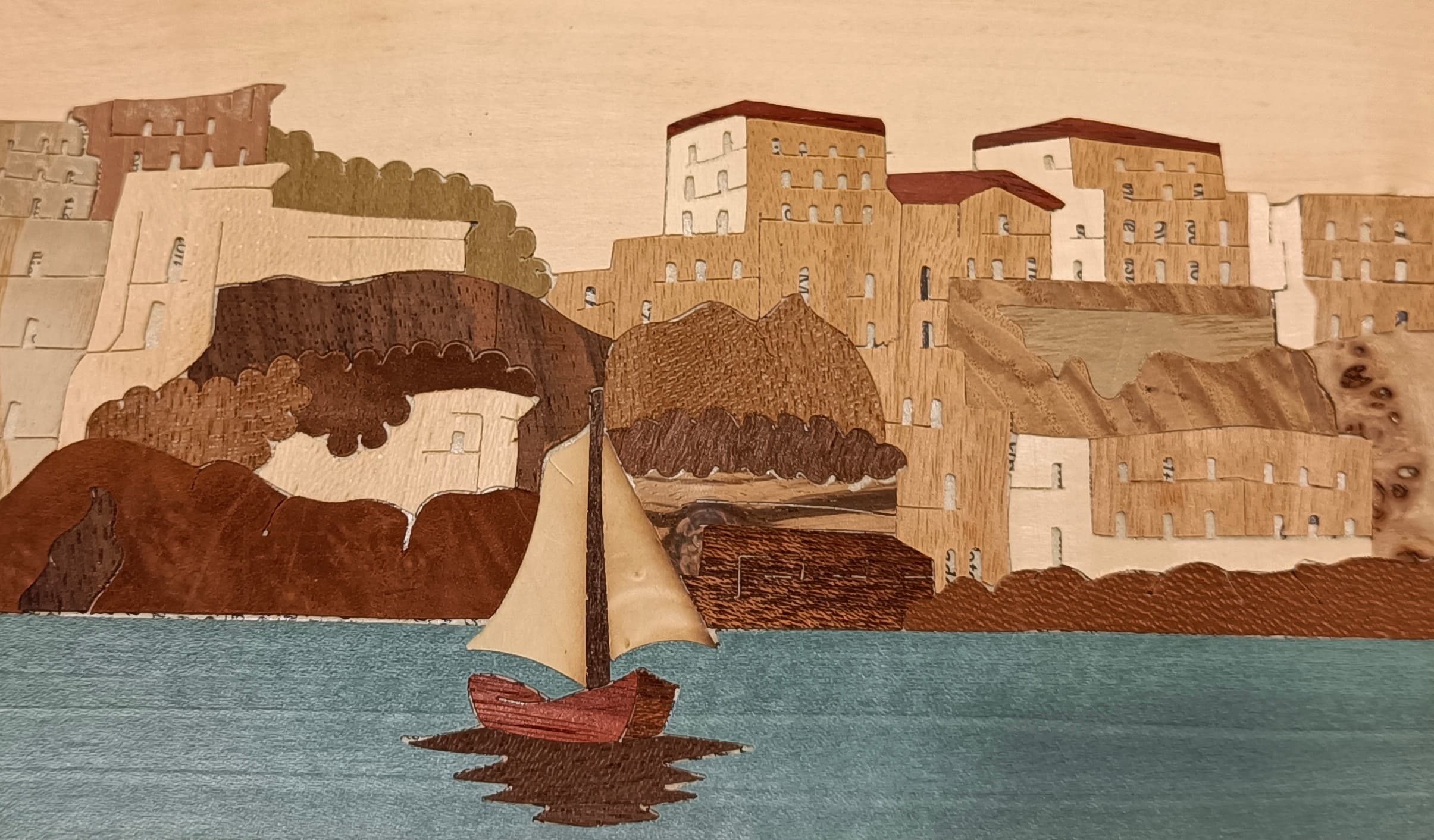
The motifs are drawn from what surrounds the workshop: sailing boats on the gulf, cliffside houses, branches heavy with Sorrento’s lemons, and the odd cat watching it all from a garden wall. Alongside these coastal scenes sit older decorative patterns, damask and arabesque scrollwork, inherited from the broader Neapolitan inlay tradition and still cut the same way today.
Handmade, not manufactured
Most inlaid wood sold today is cut by laser or CNC router from printed or machine-sliced veneer, assembled in volume and largely identical piece to piece. It can look convincing from a distance, but the wood grain is often too regular, too repeatable, to be real.
Handmade tarsia lignea is slower and costs more for a reason: every veneer is cut and placed by a person, working from a piece of wood whose grain and colour won’t repeat exactly anywhere else. It is a craft still practiced in a small number of family workshops in Sorrento, rather than a manufacturing process.
Why no two pieces are alike
Wood is a natural material: the grain, tone and figure of one walnut veneer will never quite match another, even cut from the same tree. Add a hand cutting every piece rather than a machine repeating a file, and the result is a piece that exists once. The version we show online is a close guide to what you’ll receive, not an exact promise.
Explore the collection